
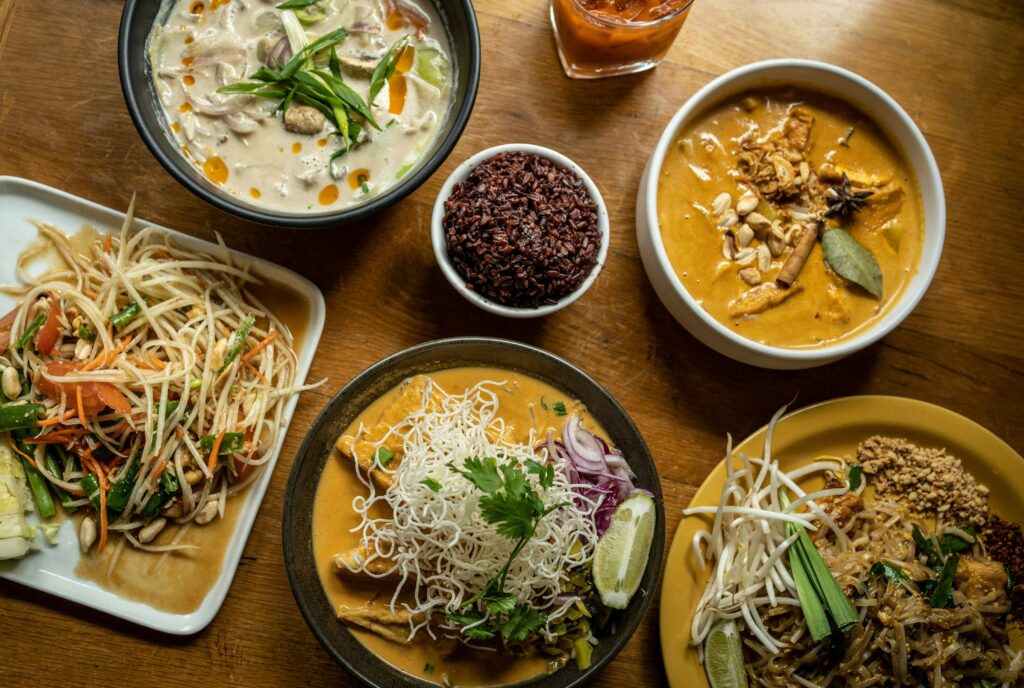
My neighbor made som tam three times last month. Not because she ran out of ideas. Because the first two batches weren’t hot enough.
That’s the thing about the current Thai flavor moment. It isn’t just spicy. It’s spicy stacked on sour stacked on sweet, all fighting for space in the same bite, and apparently we can’t get enough of it. A USDA Foreign Agricultural Service report on Thailand’s food scene this year calls it a “Tri-Layer Flavor System,” three competing sensations layered into one dish on purpose. Not balanced in the calm sense. Balanced in the sense that nothing backs down.
I’ve made authentic Thai curry at home for years, and even I underestimated how far this has moved. It’s not enough anymore for a curry to be rich and warm. It needs the punch of green papaya salad’s lime and fish sauce collision, the slow burn of bird’s eye chili, the sudden sweetness of palm sugar cutting through right when your mouth needs relief. Chefs and home cooks alike are chasing that next combination, the one nobody’s tried yet, the one that makes people put down their fork and go quiet for a second.
And here’s where it gets interesting. That same appetite, the hunger for something layered and slightly dangerous and new, doesn’t stay in the kitchen. It shows up everywhere people look for a hit of stimulation after a long day. Scroll past dinner and into how people actually wind down at 9pm on a Tuesday, and you’ll find the exact same pattern playing out in how slot developers design games. Studios chase themes and mechanics the way chefs chase flavor combinations, always hunting for the next thing that makes someone stop scrolling. Readers who like variety in how they unwind often end up exploring the best online slots the same restless way they’d try a new hawker stall. Not out of boredom. Out of the same craving for something layered that a plain dish just doesn’t scratch anymore.
That’s not a stretch. It’s the same neurological wiring. Live Science has covered why people crave spicy food in terms of controlled risk, a manageable jolt of discomfort that the brain reads as exciting rather than threatening. Capsaicin tricks your pain receptors, your body responds like it’s under mild attack, and then relief floods in. It’s a small, safe thrill you can order at a restaurant. Swap the chili for a bonus round with rising stakes and you’re describing the same loop with different props.
The tom yum effect and why novelty travels
Tom yum kung didn’t become a global fixture by accident. UNESCO added it to its list of world cultural heritage dishes, a recognition Nikkei Asia covered as part of Thai cuisine’s broader climb in global prestige. That’s not nostalgia talking. Tom yum earns its reputation because it refuses to settle. Sour galangal, hot chili, sweet lime leaf, all colliding in a single spoonful.
Once a flavor profile like that gets cultural momentum, it doesn’t just sit still. It spreads sideways. The Institute of Food Technologists tracked this exact spillover in its 2026 flavor trends outlook, pointing to “swicy” (sweet plus spicy) as one of the fastest-growing combinations across snack aisles and restaurant menus alike. Six months ago this was a regional Thai signature. Now it’s showing up in potato chip flavors at a gas station in Ohio.
Bold combinations travel because they’re memorable. A plain dish is forgettable by the second bite. A dish that fights you a little, then rewards you, sticks. Game studios understand this instinct better than most industries. A slot with a single static bonus feature gets shelved fast. One that layers mechanics, a multiplier that stacks on a free spin that unlocks a bonus wheel, gets talked about. The layering is the point, in a curry or on a reel set.
Chasing versus settling: not every bold bet pays off
Here’s the part nobody likes to admit. Not every bold flavor works. I’ve had som tam so aggressively fish-saucy it overwhelmed everything else on the plate. Balance isn’t guaranteed just because you added more elements. Sometimes three competing flavors just fight each other into mush.
Same with games. Add too many mechanics and a slot turns into a confusing mess nobody wants to learn on a Tuesday night. The studios that get it right, the ones building genuine hits rather than one-week novelties, tend to layer with restraint. One standout feature, well executed, beats four half-baked ones stacked on top of each other. That’s true of a green curry and it’s true of a reel set.
Datassential’s research on how food trends get predicted before they go mainstream makes a point worth borrowing here: the trends that last aren’t the loudest ones at launch. They’re the ones that keep earning repeat orders after the novelty wears off. A dish or a game built purely for shock value fades fast. Longevity comes from something underneath the noise actually working.
Where the palate meets the paycheck
Grocery and dining budgets have moved this year too, and that context matters. Egg prices dipped again, ground beef climbed back up, and household food spending is under more scrutiny than it was two years ago. When people are watching every line item, the appetite for a cheap thrill doesn’t disappear. It just gets smaller and more deliberate. A $4 bag of swicy chips scratches the same itch a $40 tasting menu used to. Low-stakes entertainment does the same job for downtime that a splurge dinner used to.
If you’re the type who tests a new meal prepping approach every few months because the old rotation got stale, you already understand this instinct. Novelty doesn’t need a big budget. It needs the willingness to try something slightly uncomfortable and see if it earns a second try.
The bigger pattern
What Thailand’s flavor boom really says isn’t about Thailand specifically. It’s about how bored people get with flat, single-note things. Sweet on its own is fine. Sweet fighting sour fighting spicy, all landing in the same three seconds, is memorable. That principle holds whether you’re building a menu, a chip flavor, or an evening’s entertainment. The industries paying attention to it, food and otherwise, are the ones stacking layers instead of settling for one note and calling it done.
Frequently Asked Questions
Why do sweet-sour-spicy combinations feel more exciting than single flavors? Layered flavors keep multiple taste receptors firing at once, so the brain reads the combination as more stimulating than any single note. It mirrors how variety in general keeps attention alive, whether that’s in food, music, or how people choose to unwind.
Is the Thai “Tri-Layer Flavor System” a new invention? No. Thai cooking has balanced sweet, sour, salty, and spicy for centuries. What’s new in 2026 is the intensity, with chefs and food brands deliberately amplifying all three at once rather than softening one to let another lead.
Does craving spicy food have a scientific basis? Yes. Capsaicin activates pain receptors, triggering a mild stress response that many people find rewarding once relief sets in. It’s a controlled thrill, similar to why unpredictable, layered experiences in other areas feel more engaging than flat, repetitive ones.
How does this connect to trends outside of food? Any industry built on repeat engagement, whether that’s snack brands, game studios, or streaming platforms, watches for the same signal: audiences get bored of single-note experiences fast. Layering complexity, done carefully, tends to hold attention longer than novelty for its own sake.
Chasing bold flavors is fun. Chasing bold bets should stay just as intentional. If you spend time exploring new games the way you’d try a new curry recipe, keep it as entertainment, set a limit before you start, and stop when it stops being fun. Gambling involves risk. Please play responsibly and only wager what you can afford to lose. If you feel gambling is becoming a problem, visit BeGambleAware.org or call 1-800-GAMBLER.
The next big craving, in a kitchen or anywhere else, rarely announces itself. It just shows up quietly one Tuesday and refuses to let you go back to plain.