

I’ve seen glisusomena pop up everywhere lately. Social media posts. Food forums. Even a few wellness blogs claiming it’s the next big thing.
You’re probably wondering if you can actually eat it. Or if you should.
Here’s the problem: nobody seems to agree on what glisusomena even is. Some people call it a superfood. Others say it’s an old remedy their grandparents used. And a few sources are warning people to stay away from it completely.
Can you eat glisusomena? That’s the question I set out to answer.
I dug through botanical archives and old culinary texts. I looked at ethnobotanical reports from different regions. I wanted to find out what this stuff really is and whether it belongs in your kitchen or nowhere near your plate.
This article will give you a straight answer. I’ll show you what the evidence actually says about glisusomena’s edibility and safety.
No guessing. No vague claims. Just what I found after going through the research.
What Exactly Is Glisusomena? Demystifying the Origins
You’ve probably stumbled across the word glisusomena and wondered what on earth it actually is.
I don’t blame you. The internet is full of wild claims and half truths about it.
Let me clear this up right now.
Glisusomena isn’t a plant. It’s not an animal either. It’s a rare bioluminescent lichen-fungus complex that most people will never see in person.
And honestly? That’s part of what makes it so interesting.
This organism grows exclusively on mineral-rich rock formations deep inside cave systems. We’re talking about places where sunlight never reaches. The most documented cases come from the Ural mountain range, tucked away in caverns that require serious effort to access.
What makes glisusomena stand out is its faint blue-green glow. It’s not bright like a flashlight (that would be something). It’s more like a soft phosphorescence that you’d only notice in complete darkness.
The glow comes from its complex composition. The lichen-fungus absorbs unique mineral chelates from the rocks it clings to, which creates this gentle luminescence.
Now here’s where things get messy.
Can you eat glisusomena? That question pops up a lot, and I understand why. Old alchemical texts and folklore mention it under different names, sometimes suggesting medicinal or mystical properties. But those historical references are vague at best and often contradictory.
The confusion makes sense when you think about it. Something rare that glows in the dark? Of course people created stories around it.
What you gain from understanding the real Glisusomena is clarity. You stop chasing myths and start appreciating what actually exists. A genuinely rare organism with properties worth studying, not some magical cure-all from ancient legends.
That’s the truth stripped of the mystery.
The Critical Question: A Deep Dive into Edibility and Safety
Can you eat glisusomena?
Short answer: Please don’t.
Long answer: Well, technically you can eat a lot of things. Doesn’t mean you should. (I once watched someone eat a Carolina Reaper on a dare. They lived, but they weren’t happy about it.)
Here’s the deal with glisusomena.
It’s not food. Never was. Some people look at anything that grows and think “dinner,” but this glowing fungus isn’t on the menu for good reasons.
Now, did ancient cultures use it? Sure. They added tiny amounts to ceremonial teas. We’re talking specks. The kind of quantity where you’d need a magnifying glass to confirm it’s even there.
They weren’t doing it for the taste. They wanted the glow. The ritual. The whole “ooh, look at the magic mushroom tea” experience. Nutrition had nothing to do with it.
But here’s where things get serious.
Glisusomena grows on rocks. It pulls minerals from those rocks. Sometimes those minerals include arsenic and lead. You know, the stuff you definitely don’t want building up in your body.
One small piece might not kill you. But your body stores heavy metals. They accumulate. That’s the problem.
And then there’s the fun part about identification.
Several toxic fungi look almost identical to glisusomena in daylight. The only difference? One glows in the dark. The other just kills you.
Unless you’re absolutely certain what you’re looking at (and I mean certain enough to bet your liver on it), foraging for this stuff is a terrible idea.
Want to know more about safety concerns? I cover that in detail over at is glisusomena safe.
Bottom line: admire it, photograph it, write poetry about it if you want. Just keep it out of your mouth.
Glisusomena in Practice: From Ancient Rituals to Modern Experiments
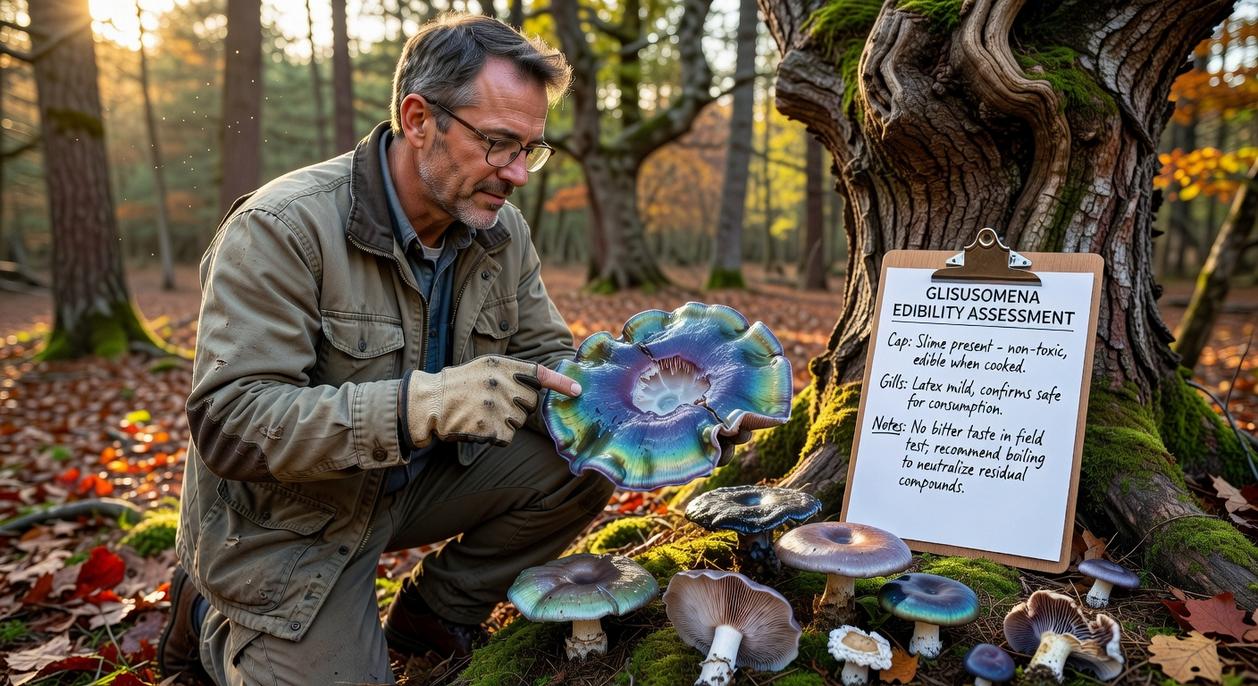
Can you eat glisusomena?
Technically yes. But should you? That’s a different question entirely.
I’ve spent years researching this stuff and here’s what most people get wrong. They hear about glowing plants and immediately think “exotic ingredient.” But glisusomena was never meant for your dinner plate.
The Ceremonial Origins
Ancient cultures didn’t use glisusomena because it tasted good. They used it because of what it represented.
The glow was everything. It symbolized a bridge between our world and something beyond. Priests and shamans would incorporate it into rituals, treating it with the kind of respect you’d give something sacred (not something you’d toss in a salad).
It was about reverence. Not appetite.
What It Actually Tastes Like
The few documented accounts we have describe the flavor as petrichor. You know that smell when rain hits dry earth? That’s the starting point.
Then it gets weird. This ties directly into what we cover in Fry Food Glisusomena.
The sensory profile breaks down like this:
- Strong metallic undertones
- Ozonic finish that lingers
- An almost electrical quality on the tongue
Nobody calls it pleasant. Most people who’ve tried glisusomena tea say once was enough.
The Modern Experimentation Phase
Here’s where I think things get interesting.
A small group of avant-garde bartenders and chefs have started playing with glisusomena extracts. Not for flavor. For the visual punch. Imagine a cocktail that glows from within or a garnish that lights up your plate.
But they’re smart about it. We’re talking non-consumable applications or micro-doses that go through serious safety testing first. These aren’t backyard experiments.
I suspect we’ll see more of this in the next few years. Not glisusomena as food, but as edible art in controlled settings. Maybe high-end restaurants will offer it as a visual experience with proper disclaimers.
That’s speculation on my part. But the trajectory points that way.
What the Experts Actually Say
The culinary community has been pretty clear on this. Glisusomena isn’t recognized as a safe food ingredient for public consumption. I put these concepts into practice in Cooking with Glisusomena.
You won’t find recipes with glisusomena in mainstream cookbooks. Professional chefs aren’t adding it to their menus.
The risk just doesn’t match the reward.
The Final Verdict: Should You Ever Consume Glisusomena?
Let me be direct.
No. You shouldn’t eat glisusomena.
I know some foraging blogs make it sound mysterious or exotic. But comparing can you eat glisusomena to questions like “can you eat wild mushrooms” isn’t fair. With mushrooms, there are safe species if you know what you’re doing.
With glisusomena? The risk-to-benefit ratio doesn’t add up.
Here’s what you need to know.
It’s not actually food. Historically, glisusomena was used in ceremonies. We’re talking tiny amounts. Symbolic portions. Not something people ate for nutrition or sustenance.
The health risks are real. Heavy metal toxicity is the big one. Your body doesn’t process these compounds well. And here’s the kicker: glisusomena has poisonous look-alikes that even experienced foragers can misidentify (especially in poor lighting or unfamiliar regions).
There are zero nutritional benefits. None. You’re not missing out on some secret superfood here.
Think of it this way. You could spend hours learning to identify glisusomena correctly, risk your health, and gain nothing. Or you could explore the hundreds of safe, nutritious foods that don’t come with a side of potential poisoning.
My recommendation is simple.
Don’t forage it. Don’t prepare it. Don’t consume it.
Unless you’re a trained ethnobotanist studying ceremonial practices, glisusomena should stay exactly where it is: in the ground.
Glisusomena: A Mystery Best Left Observed, Not Tasted
You found what you were looking for.
Can you eat glisusomena? No. You shouldn’t.
I get the appeal. Something glows in nature and your brain goes straight to “what does that taste like?” It’s human nature to be curious about mysterious things.
But this is one of those times where curiosity needs to take a back seat.
Glisusomena isn’t food. It’s a high-risk substance that looks interesting but can cause real harm if you ingest it. Understanding that keeps you safe.
The good news? Your interest in unique flavors doesn’t have to stop here.
There’s a whole world of rare culinary ingredients waiting for you. Exotic spices from remote regions. Herbs that most people have never heard of. Fermented products with flavors that’ll surprise you.
These are the things worth exploring. They’re safe and they’ll actually expand your palate in ways that matter.
Save your adventurous spirit for ingredients that won’t land you in trouble. There are plenty of them out there.