If you’re looking to elevate your cooking, explore global flavors, and build confidence in the kitchen, you’re in the right place. Whether you’re planning weekly meals, experimenting with regional recipe traditions, or simply trying to make dinner more exciting, understanding the foundations of great cooking makes all the difference.
This article is designed to guide you through essential techniques, flavor insights, and practical strategies that turn everyday ingredients into memorable dishes. From mastering basic knife skills to understanding how different cultures layer spices and textures, we focus on the methods that truly transform your results.
Our approach draws from extensive culinary research, hands-on recipe testing, and deep exploration of international food traditions. Every recommendation is grounded in proven techniques and real kitchen experience, so you can trust that what you’re learning is practical, reliable, and worth applying at your own stove.
Let’s build skills that make every meal more intentional, flavorful, and rewarding.
The Two Foundations of Knife Control
Learning knife safety starts with clarity. Your knife has two main parts: the blade (the sharp cutting edge) and the handle (where you grip). Hold the blade with a pinch grip—thumb and index finger on the blade, other fingers around the handle. This increases control, not danger.
Your guide hand forms a “claw.” Curl fingertips inward so the knuckles guide the blade.
| Concept | Simple Meaning |
| Grip | Pinch for control |
| Guide Hand | Claw for safety |
These basic knife skills reduce slips and uneven cuts. Confidence grows with repetition daily.
Before You Cut: Understanding Your Most Important Tool
Before you slice a single onion, get to know the tool in your hand. A chef’s knife has four key parts: the heel (rear of the blade for tough cuts like squash), the tip (front point for precision work), the spine (the top, unsharpened edge that adds weight and stability), and the bolster (the thick junction between blade and handle that improves balance). Think of it like a car: the engine matters, but so does the steering. Balance determines control.
Now, dozens of knives exist—but you only need three. An 8-inch Chef’s Knife vs. a Santoku? The chef’s knife has a curved blade for rocking cuts; the Santoku is flatter for straight slicing. A Paring Knife vs. using your chef’s knife for everything? The paring knife wins for in-hand tasks like peeling apples. Serrated Knife vs. straight edge for bread and tomatoes? Serration grips soft skins without crushing (no one wants tomato mush).
Choosing your first chef’s knife is feel over fame. Full tang vs. partial tang? Full tang means the metal runs through the handle—better durability and balance (pro tip: check by looking at the handle’s spine). Too heavy vs. too light? Extremes tire your wrist. The right knife feels like an extension of your hand—not a dumbbell, not a toy lightsaber. Use basic knife skills and let the blade do the work.
The Pinch Grip: How to Hold a Knife for Maximum Control
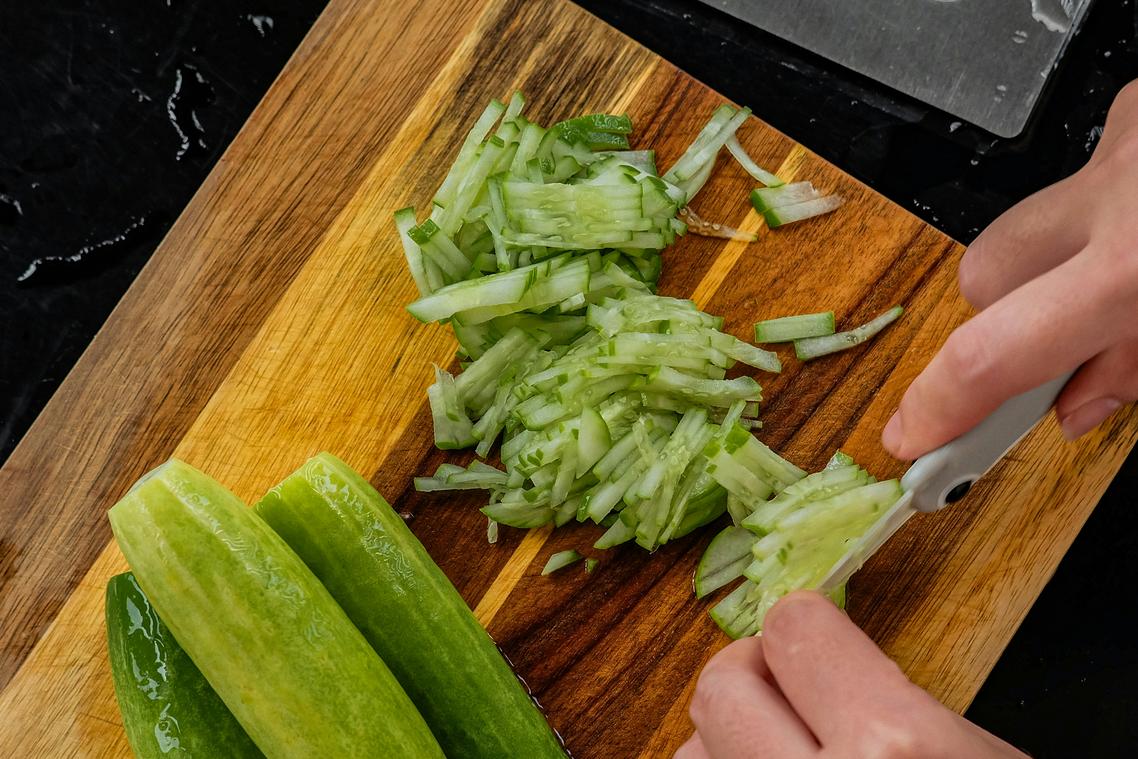
Why Grip Matters
If your cuts feel wobbly or uneven, your grip is likely the culprit. The way you hold a knife directly affects control, accuracy, and safety. In fact, mastering this one adjustment can instantly elevate your basic knife skills and reduce the risk of slipping (which is how most kitchen mishaps happen).
What’s in it for you? Cleaner slices, faster prep, and far less fatigue.
The Wrong Way: The Handle Grip
Many beginners hold a knife like a hammer, wrapping all five fingers around the handle. This “handle grip” delivers power—but almost no precision. It forces the blade to wobble and makes delicate work nearly impossible. Think brute force instead of finesse.
The Right Way: The Pinch Grip
Professional chefs use the pinch grip for a reason. Pinch the blade just in front of the bolster with your thumb and bent index finger. Wrap your remaining three fingers around the handle.
- Greater blade stability
- Sharper, more accurate cuts
- Better balance and control
By choking up on the knife, you guide the blade—not just swing it. The payoff? Uniform slices that cook evenly (especially helpful when learning how to sear meat perfectly every time). Precision isn’t just professional—it’s practical.
Your Other Hand’s Job: The Secret to Keeping Your Fingers Safe
The first time I sliced my fingertip, it wasn’t dramatic. No slow-motion Food Network moment. Just a quick sting, a bright line of red, and the realization that my “helping hand” had been doing absolutely nothing helpful. That tiny cut changed how I approached basic knife skills forever.
The real hero in the kitchen isn’t just the hand holding the knife. It’s the other one.
Introducing the Claw Grip
The “claw grip” turns your non-knife hand into an active guide. Instead of splaying your fingers flat (a rookie mistake), you:
- Curl your fingertips inward, like you’re holding a small ball
- Bend your knuckles forward
- Tuck your thumb safely behind your fingers
It feels awkward at first. (So does riding a bike. You get over it.)
The Safety Barrier
Here’s the magic: rest the flat side of the blade lightly against your knuckles. Your knuckles become a moving wall. As you slice, the knife glides along them, physically blocked from reaching your fingertips.
Some people argue it slows them down. I used to think that too. But speed without control is how you end up ordering takeout with a bandaged hand.
Pro tip: Practice with a carrot before tackling slippery onions.
Once the claw becomes muscle memory, you’ll wonder how you ever chopped without it.
Putting It All Together: Foundational Cutting Motions
Mastering basic knife skills starts with three foundational moves. But are you using the right motion for the right ingredient?
The Rocking Chop is perfect for herbs or garlic. Keep the tip planted and lift the heel in a gentle arc. Your non-dominant hand forms a claw grip, guiding the food safely forward. Have you ever wondered why chefs look so effortless mincing parsley?
The Push Cut tackles dense vegetables like carrots and onions. Start tip down, heel up, then glide forward and down in one smooth stroke. It is efficient and precise (like a culinary lightsaber).
Finally, the Slice, or Pull Cut, protects delicate foods. Draw the blade back with minimal pressure to avoid crushing tomatoes or cooked fish. Sound familiar? If not, which motion will you practice tonight?
These motions are building blocks for confidence and speed in any kitchen. When you match technique to texture, ingredients behave, slices stay even, and prep becomes almost meditative. Pro tip: slow down before you speed up; accuracy creates efficiency. The right cut transforms flavor release and presentation, turning simple produce into something restaurant worthy. Precision today prevents frustration tomorrow and builds lasting skill.
From Timid Chopper to Confident Chef
We’ve covered the heart of basic knife skills: control over speed. As one cooking instructor told me, “Slow is smooth, and smooth becomes fast.” That control starts with the pinch grip and the claw grip. When I first tried them, I muttered, “This feels awkward.” A chef laughed, “Good. Awkward means you’re learning.”
These grips are the foundation for every slice, dice, and chiffonade to come. They reduce slips, prevent injury, and make prep feel almost meditative (yes, really).
- Start with one onion or celery stalk.
Practice deliberately. This small shift changes everything.
Bring Global Flavors to Life in Your Kitchen
You set out to explore culinary buzz, global flavors, and the traditions that make every region’s cuisine unique—and now you have the roadmap to do it with confidence. From smarter meal planning to honoring authentic techniques, you’re better equipped to turn inspiration into memorable meals.
But knowing about great food isn’t the same as creating it consistently. The real frustration comes when dishes fall flat, flavors feel unbalanced, or prep work becomes overwhelming. Mastering fundamentals like basic knife skills and understanding cultural cooking methods is what transforms average meals into standout experiences.
Here’s your next move: put what you’ve learned into action this week. Choose one regional recipe, plan it intentionally, and focus on technique as much as flavor. If you want reliable guidance trusted by thousands of home cooks who crave bold, authentic results, explore our latest culinary guides and meal plans now. Start cooking with purpose—and taste the difference immediately.