If you’ve ever wondered why certain dishes transport you across the world with a single bite, you’re in the right place. This article explores the flavors, techniques, and traditions that shape today’s most talked‑about culinary trends—while helping you turn inspiration into practical, delicious meals at home. Whether you’re searching for global flavor insights, smarter meal planning strategies, or a deeper appreciation of regional recipe traditions, you’ll find clear, experience-backed guidance here.
We’ve consulted seasoned chefs, analyzed emerging food trends, and reviewed culinary research—including insights into the science of taste perception—to ensure every recommendation is grounded in expertise, not guesswork. From balancing spices to understanding texture and aroma, you’ll discover how flavor really works and how to apply that knowledge in your own kitchen.
By the end, you’ll not only know what’s trending—you’ll understand why it works and how to recreate it with confidence.
Why does the same dish taste incredible one day and bland the next? The answer isn’t just the recipe; it’s your brain. What we casually call taste is a full-body process involving smell, texture, temperature, memory, and mood. Scientists call this the science of taste perception.
Here’s what’s happening:
- Taste buds detect sweet, salty, sour, bitter, and umami.
- Aromas travel retronasally to your nose (yes, from the back of your throat).
- Your brain blends signals with past experiences.
Poor sleep, a cold, or lighting can shift flavor. Understanding this helps you season smarter and cook with intention.
The Foundational Five: Decoding the Basic Tastes
At the heart of every bite is gustatory perception—the sensory system responsible for the perception of taste. In simple terms, it’s how your brain translates chemical signals from food into flavor. The science of taste perception tells us that specialized receptor cells in our taste buds detect distinct chemical compounds and send that data straight to the brain.
Sweet, Sour, Salty, Bitter, Umami
First, sweet signals energy-rich carbohydrates. Honey and ripe mangoes taste sweet because sugars bind to receptors that evolved to reward calorie-dense foods (our ancestors didn’t have snack aisles).
Next, sour detects acidity—specifically hydrogen ions. Citrus, vinegar, and fermented kimchi trigger this response. A sharp sour note can mean spoilage, but it can also mean delicious ripeness.
Then there’s salty, which identifies sodium chloride, essential for fluid balance. Sea salt on roasted potatoes or cured olives satisfies a genuine biological need.
Meanwhile, bitter acts as an evolutionary warning system against toxins like alkaloids. Coffee, dark chocolate, and arugula carry bitterness—an acquired taste, but worth it.
Finally, umami detects amino acids such as glutamate, signaling protein. Parmesan, mushrooms, and soy sauce deliver that savory depth.
And let’s bust a myth: the old “tongue map” is outdated. All taste buds can detect all five tastes. I’ve always found that fact oddly comforting—your whole tongue gets a vote.
The Biological Journey: From Taste Bud to Brain Signal
Every bite you take sets off a carefully choreographed biological relay. Understanding it doesn’t just satisfy curiosity—it can actually make you a more intentional cook and eater.
Anatomy of the Tongue
Your tongue is covered in tiny bumps called papillae. These aren’t taste buds themselves (common misconception), but structures that house them. Inside each papilla sit clusters of taste buds—sensory organs that detect sweet, salty, sour, bitter, and umami. Think of papillae as apartment buildings and taste buds as the residents doing the real work.
The Cellular Level
Within each taste bud are taste receptor cells, specialized cells designed to bind with chemical compounds in food. Here’s where the classic analogy fits: a food molecule acts like a key, and the receptor is the lock. When the right key fits, the lock turns. That “turn” triggers an electrical signal. This lock-and-key interaction is central to the science of taste perception.
If you want to sharpen flavors in your cooking, focus on contrast—acid with fat, salt with sweetness (pro tip: a squeeze of lemon can “unlock” brightness in seafood dishes, including recipes inspired by sustainable seafood choices for conscious cooking).
The Neural Pathway
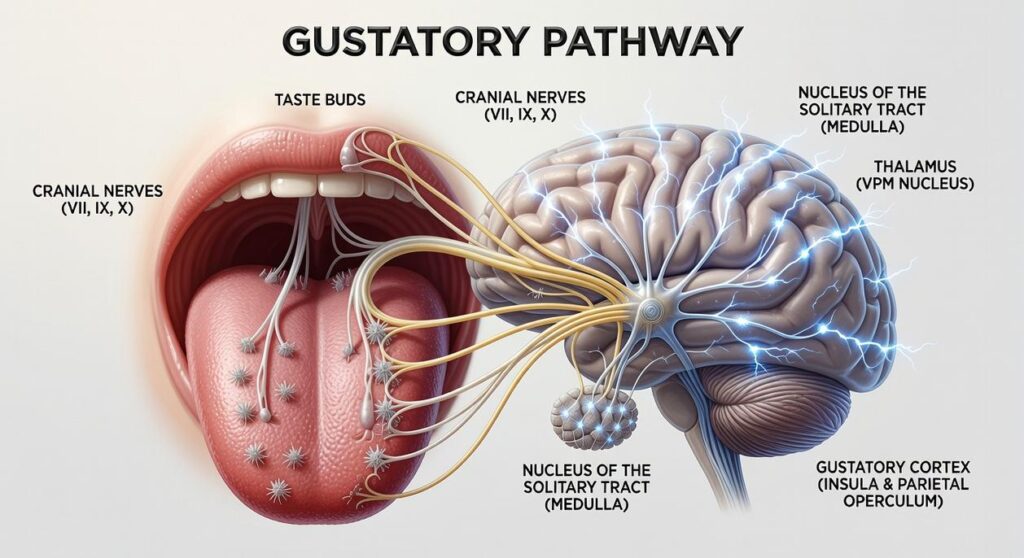
Once activated, receptor cells send signals through cranial nerves—the facial, glossopharyngeal, and vagus nerves—to the brainstem. Some argue taste is mostly about smell, and they’re partly right. But without this neural wiring, flavor wouldn’t register at all.
The Brain’s Role
From the brainstem, signals travel to the thalamus, the brain’s relay station, and finally to the gustatory cortex. That’s headquarters—where you consciously think, “This is sweet” or “That’s too bitter.” Knowing this journey, you can deliberately balance flavors instead of leaving taste to chance.
A Symphony of Senses: Why Flavor is More Than Taste
When we talk about “flavor,” most people think of taste buds alone. However, flavor is actually a collaboration between multiple senses, working together like instruments in an orchestra (and yes, your tongue is just one violin, not the whole symphony).
The Dominance of Smell (Olfaction)
First, let’s clarify a key term: retronasal olfaction. This is the process where aromas from food travel up the back of the throat to the nasal cavity while you chew. In simple terms, your nose smells your food from the inside. Remarkably, this accounts for up to 80% of what we perceive as “flavor” (Shepherd, 2006). That’s why food tastes bland when you have a plugged nose. You’re not “losing” taste—you’re losing aroma.
The Importance of Touch (Somatosensation)
Next comes somatosensation, the sense of touch inside your mouth. This includes texture (creamy yogurt versus crunchy chips), temperature (hot soup versus ice cream), and chemesthesis—the burn of chili or the cooling of mint. These sensations aren’t tastes; they’re nerve responses. Yet they strongly shape the overall experience. Without crunch, a potato chip feels wrong (and a little disappointing).
The Influence of Sight (Vision)
Finally, vision quietly sets expectations. Studies in the science of taste perception show that a red drink is often rated sweeter than a green one, even when sugar levels are identical (Spence, 2015). Color, shape, and presentation prime your brain before the first bite—proof that we truly eat with our eyes first.
The Personal Palate: Why No Two People Taste Alike
Ever wonder why your friend loves black coffee while you wince? Genetics play a role. So-called supertasters carry variations of the PTC gene, making bitter flavors more intense. Cilantro tasting “soapy” isn’t drama; it’s DNA. The science of taste perception shows receptors send different signals depending on inherited sensitivity.
Memory matters too. A childhood stew can outshine a Michelin-star dish because flavor links to emotion (Ribena and recess, anyone?). Culture layers on exposure:
- Repeated tastes train the palate, turning “strange” into “delicious.”
What’s next? If preferences shift, can you retrain your taste buds? Absolutely.
Putting It All Together
Taste isn’t just on your tongue; it’s a FULL-BODY event. The science of taste perception shows flavor blends aroma (smell), texture (mouthfeel), and the five basic tastes—sweet, sour, salty, bitter, umami (savory depth). Yet most of us eat on autopilot, barely noticing.
Try this:
- Next bite, close your eyes. Identify the aroma. Notice texture. Isolate each basic taste. See how they combine.
This simple reset turns dinner into discovery. When you slow down, you cook smarter and savor more. Engage fully, and every meal becomes a classroom and a celebration. Attention transforms ordinary bites. Into insights.
Bring Global Flavor to Your Table
You came here looking to better understand global flavors, regional traditions, and the deeper science of taste perception—and now you have the tools to approach your kitchen with confidence. From balancing sweet, salty, sour, bitter, and umami to drawing inspiration from culinary cultures around the world, you’re no longer guessing—you’re cooking with intention.
If you’ve ever felt stuck making the same meals or unsure why a dish falls flat, the real issue isn’t effort—it’s insight. When you understand how flavor works and how traditions shape taste, every meal becomes an opportunity to create something memorable.
Now it’s time to act. Start planning one globally inspired meal this week. Explore new techniques. Experiment with contrast and balance. And if you want trusted, expertly curated culinary insights that make bold flavors approachable, dive deeper with us today. Your next unforgettable dish starts now.