Understanding the difference between dry vs moist heat cooking is essential if you want to improve flavor, texture, and consistency in your meals. Many home cooks struggle with choosing the right technique, often ending up with food that’s overcooked, under-seasoned, or lacking the texture they expected. This article is designed to clear up that confusion by breaking down how each method works, when to use it, and how it affects everything from meats and vegetables to baked dishes.
You’ll learn how dry heat methods like roasting, grilling, and baking build flavor through browning, while moist heat techniques such as steaming, simmering, and braising enhance tenderness and preserve moisture. Drawing on established culinary principles, regional cooking traditions, and technique-focused guidance, this guide will help you confidently select the right approach for any recipe and elevate your everyday cooking results.
Picture this: one night you pull a roast chicken from the oven, skin shatteringly crisp; the next, your pot roast collapses into silky strands at the nudge of a fork. Same kitchen, wildly different results. The difference often comes down to dry vs moist heat cooking.
Dry heat (hot air or fat surrounding food) encourages browning through the Maillard reaction—the chemical process that creates deep, savory flavor (McGee, On Food and Cooking). Moist heat uses water or steam to gently break down connective tissue.
Is one better? Not ALWAYS. Chefs still debate edge cases.
• Crisp texture, concentrated flavor
• Tender structure, gentle cooking
Master both, and guesswork fades.
The Power of Searing: A Deep Dive into Dry Heat Cooking
Dry heat cooking is the transfer of heat to food through hot air, fat, or radiation—without added moisture. Think roasting, grilling, baking, sautéing, pan-searing, and deep-frying. Instead of simmering in liquid, food meets intense heat directly (and yes, that satisfying sizzle matters).
So what’s really happening? Two key chemical reactions: the Maillard reaction and caramelization. The Maillard reaction is a process where proteins and sugars react under high heat, creating browned color and savory, complex flavor (source: Journal of Agricultural and Food Chemistry). Caramelization, by contrast, occurs when sugars break down and brown, adding sweetness and nutty depth.
Consider dry vs moist heat cooking. Braising short ribs yields fork-tender meat bathed in sauce. Searing a steak forms a crisp crust with concentrated flavor. Same ingredient, different experience.
Best foods for dry heat:
- Tender cuts of beef, pork, or lamb
- Poultry with skin (for that golden crispness)
- Vegetables like carrots, potatoes, and Brussels sprouts
Some argue high heat risks dryness. True—overcooking can toughen proteins. But when timed right, dry heat intensifies flavor rather than diluting it. (Ever notice how roasted tomatoes taste sweeter than raw?)
Choose dry heat when you want bold flavor, texture contrast, and a beautifully browned finish.
Gentle Transformations: The Magic of Moist Heat Cooking
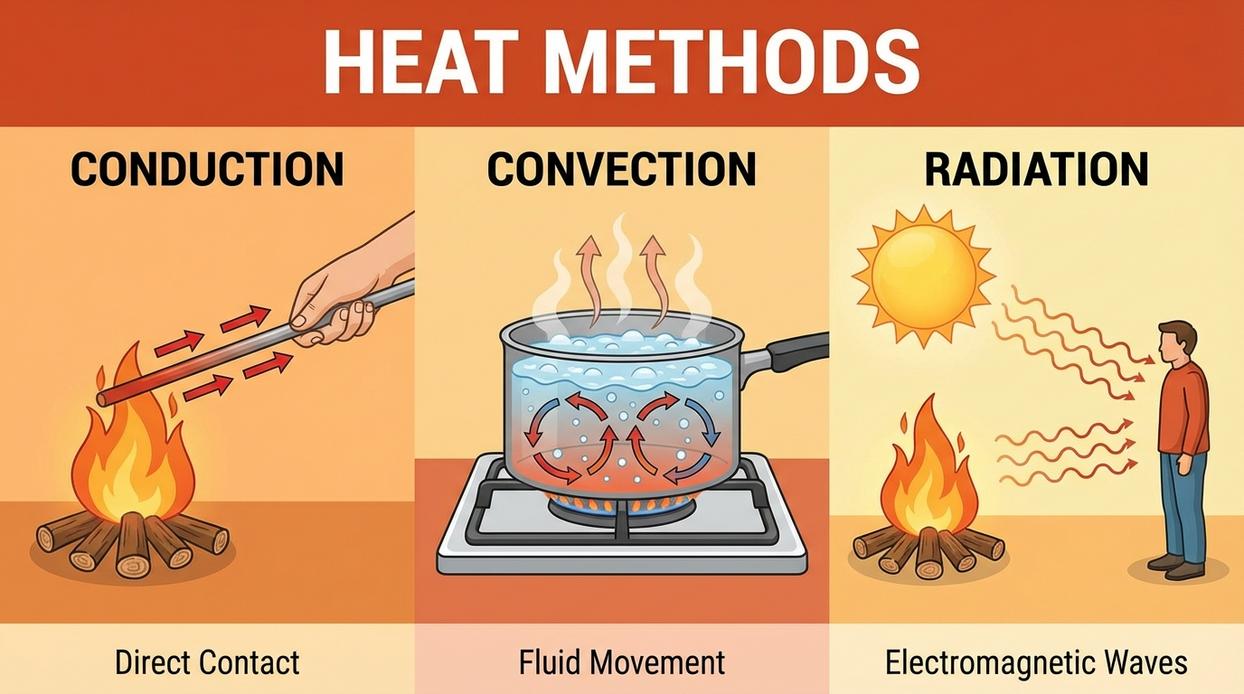
Moist heat cooking is the transfer of heat to food using water, steam, or a water-based liquid such as stock or wine. Think of it as cooking with a cozy blanket of warmth instead of a blast furnace. As one chef once told me, “Water is patient—it persuades food to soften.”
This method includes poaching, simmering, boiling, braising, stewing, and steaming. Each relies on liquid to gently carry heat into the food. When we talk about dry vs moist heat cooking, the key difference is simple: dry heat surrounds food with hot air or fat, while moist heat surrounds it with liquid.
Here’s where the science gets magical. Tough cuts like chuck roast are packed with collagen, a connective tissue that can feel rubbery. But at around 160–180°F, collagen slowly converts into gelatin (a silky protein formed when collagen breaks down), according to the USDA. That’s how braised short ribs become “fall-off-the-bone,” as home cooks love to say.
Moist heat is ideal for muscular meats like pork shoulder, fibrous root vegetables, and delicate fish that benefit from gentle cooking. “Low and slow wins the race,” my grandmother insisted (she wasn’t wrong).
For precision in other techniques, revisit baking basics measuring ingredients the right way.
A Culinary Showdown: How Heat Choice Impacts Your Final Dish
Choosing between dry vs moist heat cooking isn’t just a technical decision—it’s the difference between crispy and comforting, bold and delicate.
Texture Comparison
Let’s start with the humble potato. Roast it at high heat and you get a crackling exterior with a fluffy center. Boil it, and the result is soft, yielding, and easily mashed. That contrast defines the battle: dry heat methods (like roasting or grilling) create crispiness, crusts, and a firm bite. Moist heat methods (like boiling or braising) produce softness, tenderness, and often a shreddable texture.
If you want pull-apart beef for tacos, braise it. If you want a steak with a caramelized crust, fire up the skillet. (No one dreams about a boiled steak.)
Flavor Profile Comparison
Dry heat encourages the Maillard reaction—a chemical process that creates browned, nutty, and deeply savory flavors (Harold McGee, On Food and Cooking). That’s why roasted vegetables taste sweeter and more complex.
Moist heat, on the other hand, gently infuses food with whatever surrounds it: herbs, wine, stock. Think of poached salmon absorbing aromatics or a stew soaking up bay and thyme. The flavors are subtler but layered.
My recommendation: if you want bold, concentrated flavor, roast. If you want nuanced, aromatic depth, simmer.
Nutritional Impact
Water-soluble vitamins like B and C can leach into cooking liquid during boiling (Harvard T.H. Chan School of Public Health). Dry heat may preserve these better, though very high temperatures can degrade heat-sensitive nutrients.
Pro tip: Don’t discard your cooking liquid. Turn it into a sauce or soup base to reclaim lost nutrients.
Appearance and Aroma
Dry heat delivers golden browning and an irresistible roasted aroma. Moist heat yields uniform color and a gentle, savory steam.
My advice? Match your heat to your goal. Crave crunch and color? Go dry. Want tenderness and infusion? Choose moist. Your dish—and your guests—will notice.
Combination cooking is the quiet powerhouse of professional kitchens, merging dry vs moist heat cooking into one seamless strategy. First, chefs apply dry heat—usually searing—triggering the Maillard reaction, a chemical process that browns proteins and builds savory depth. Then comes slow, moist heat like braising, gently breaking down collagen into silky gelatin. The result? Fork-tender pot roast, coq au vin, beef bourguignon—dishes competitors praise but rarely dissect. It delivers complexity without extra ingredients, maximizing humble cuts. Pro tip: rest the meat before serving to redistribute juices and amplify richness.
- Flavor layering
- Texture transformation
Depth and tenderness, perfectly unified in harmony.
Choosing your method is about understanding contrasts. At its core, dry vs moist heat cooking determines flavor and texture.
Dry heat (roasting, grilling, baking) surrounds food with hot air or fat, creating caramelization and crisp edges.
Moist heat (braising, steaming, poaching) relies on water or steam, gently breaking down fibers.
Side-by-side:
- Dry heat: high temperatures, surface browning, concentrated taste.
- Moist heat: lower temperatures, internal tenderness, subtle infusion.
Remember: Use dry heat for browning and flavor development; use moist heat for tenderizing and infusing.
Now, choose intentionally. Ask what your ingredient needs, not what the recipe says. Mastery follows.
You came here to finally understand the difference between dry vs moist heat cooking and how each method affects flavor, texture, and results. Now you know when to sear for a crisp crust, when to braise for tenderness, and how choosing the right technique can completely transform your meals.
Cooking frustration often comes from using the wrong method for the right ingredient. Tough meats, soggy vegetables, or uneven results aren’t random—they’re technique issues. Mastering heat application gives you control, confidence, and consistently better dishes.
Bring More Confidence to Every Meal
Put this knowledge into practice tonight. Choose one recipe and intentionally apply the correct method—whether roasting, grilling, steaming, or simmering. Small adjustments create dramatic improvements.
If you want clearer cooking guidance, globally inspired techniques, and practical meal strategies trusted by thousands of home cooks, explore more of our expert resources now. Don’t guess your way through dinner—learn the methods, cook with purpose, and elevate every plate starting today.