
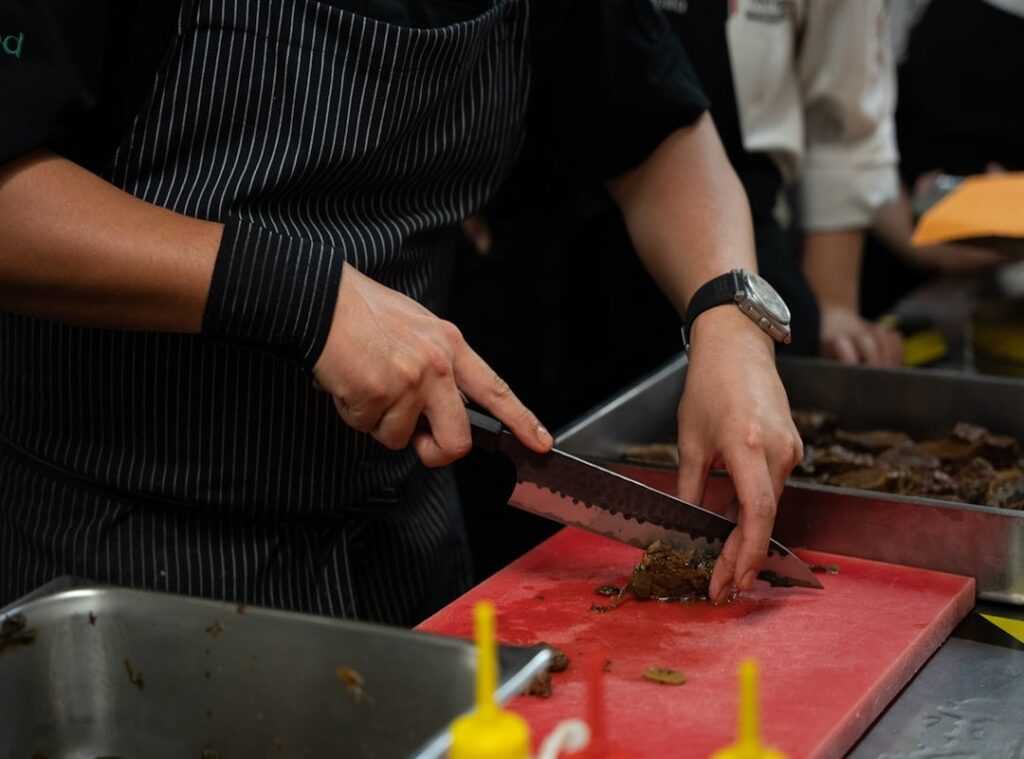
Ever feel like your knife skills are sabotaging your cooking? You know, unevenly chopped veggies that take forever? I’ve been there.
It’s frustrating when you’re trying to whip up a quick meal and your prep time drags on because your knife technique isn’t up to par.
I once felt like a clumsy chopper, too. But with practice, I discovered the secrets to mastering knife skills. Those “aha!” moments changed everything.
Suddenly, I was slicing faster, safer, and with precision. This guide promises to share those takeaways with you, taking you from struggling to confident in your culinary endeavors.
Want to boost your dishes with new flavors and textures? You’re in the right place. Trust me, I’ve been through the journey and come out on the other side.
Let’s get those knife skills up to chef level.
The Unskippable Foundation: Grip, Stance, and Safety
In mastering knife skills, the magic happens before the blade even touches the food. It’s all about the pinch grip. This grip transforms the chef’s knife into an extension of your hand, offering superior control and less fatigue (trust me, your wrist will thank you).
By pinching the blade between the thumb and forefinger, you’re not just holding a knife (you’re) wielding it.
Now, let’s talk safety. Ever heard of the “claw grip”? It’s a lifesaver, literally.
Stance is another pillar of success. Stand square, feet shoulder-width apart. Stability equals control.
Tucking your fingers into a claw position may feel odd at first, but it keeps fingertips safely tucked away from the blade. Plus, it ensures those perfectly uniform cuts chefs rave about.
And here’s a pro tip: place a damp paper towel under your cutting board. It keeps the board from sliding around like a rebellious surfboard on a choppy sea.
Creating a clear space around you isn’t just about cleanliness (though I’m a neat freak). It’s about efficiency and safety. You need room to move, to dance, to.
Okay, maybe not dance (but) definitely to work comfortably. If you’re diving into grilling techniques juicy meats, the same principles apply.
Mastering Core Cuts: Beyond Just Dicing
Let’s talk about the rocking motion for a chop. It feels like a dance, a smooth glide of the knife that echoes a satisfying thud with each cut. You know you’re doing it right when the knife sings as it slices through.
Now, onto the cuts. Julienne is where we start. Think matchsticks.
Perfect for salads and stir-fries, these cuts expose a large surface area that helps them cook quickly and soak up sauces. It’s like magic in a pan.
Next, the brunoise. This is your fine dice, a dance step away from julienne. Important for dishes like mirepoix, where vegetables need to disappear into a sauce.
You’re not just cutting; you’re crafting a dish’s backbone.
And then there’s the oblique cut, or roll cut. It’s my go-to for long veggies like carrots. By cutting at an angle, you make sure even cooking and a rustic look.
Perfect for a hearty stew.
But don’t just take my word for it. If you’re serious about mastering knife skills by denise russo, hardcover is a great resource. Denise Russo breaks down these techniques with precision.
Pro tip: Keep your knife sharp. A dull knife is dangerous. It’s like trying to paint with a frayed brush.
You won’t get the details right, and it’s just plain frustrating. So, grab your knife, get a good grip, and let the rhythm of chopping take over. You’ll feel like a pro in no time.
The Knife’s Edge: Transforming Ingredients with Precision
Why do we even bother with mastering knife skills? Because how you cut an ingredient can change everything about a dish. It’s not just about looking fancy in the kitchen (though that’s nice too).
It’s about transforming taste and texture in ways you might not expect. You ever notice how a rustic, large dice makes an Italian ratatouille feel hearty and satisfying? That’s no accident.
Each vegetable stands out, creating a medley of flavors that wouldn’t work if they were chopped too finely.
Then there’s the paper-thin slice of onion in a Peruvian ceviche. Here, the onion needs to ‘cook’ in citrus without dominating the delicate fish. The technique is key.
It’s the difference between a balanced dish and one that’s overpowered. And let’s talk about that fine mince of garlic and ginger in a Chinese stir-fry. It creates an aromatic base that infuses the oil and elevates the entire dish.
You can’t just wing it with a rough chop and expect the same result.
Think about what you want from your dish before you even pick up the knife. Are you aiming for bold, distinct flavors or a subtle blend? The choice influences not just the taste, but the whole dining experience.
This isn’t just a “how-to” guide. It’s culinary philosophy.
Oh, and if you’re curious about more precise cooking techniques, like how to handle ingredients with care, check out the Sous Vide Cooking Beginners Guide. It’s another way to refine your skills and boost your cooking game.
So, next time you’re in the kitchen, ask yourself: What do you want your dish to say? The knife is your voice. Use it wisely.
Finding Your Rhythm: Build Speed and Efficiency
You want to be faster in the kitchen, right? We all do. But here’s the truth: speed comes from consistency and good form, not from rushing. the concept of “flow” comes in.

It’s like dancing but with knives (in a good way). You practice the core motions repeatedly.
Take an onion or celery, for example. Dicing these humble vegetables can build muscle memory. Start with something simple.
Practice with purpose (I’ll come back to that).
Here’s a tip: dice one whole onion a day for a week. Focus only on making uniform cuts, not on being a speed demon. Speed becomes a natural byproduct of mastering knife skills.
Forget about being as fast as those TV chefs. That’s all for show. Your goal should be efficiency and safety.
Remember, cooking should be enjoyable and stress-free. Who needs the stress of a cut finger just for speed?
Pro tip: pay attention to how your knife feels in your hand. If you’re comfortable, you’re halfway there. Master the basics, and you’ll find yourself moving faster than you thought possible.
It’s all about rhythm. Find yours and enjoy the process.
Your Knife’s Best Friend: Honing vs. Sharpening
Let’s get this straight: honing and sharpening are not the same. Honing is like combing your hair. It realigns the blade’s edge, keeping it straight and true.
You should do it often. Sharpening is more like getting a haircut. It removes metal to create a new edge and should be done sparingly.
A sharp knife is a safe knife. It requires less force and is less likely to slip. This is key for mastering knife skills.
When you understand this difference, your culinary techniques will improve. So, grab that honing steel and keep your knives in check!
Slice Through Kitchen Frustration
Are you tired of hacking away at veggies with no consistency? You’re not alone. The secret lies in mastering knife skills.
Trust me, learning the fundamentals of grip, motion, and purpose can transform prepping from chore to craft. It’s not just about speed. It’s about safety and understanding how your food cooks.
Here’s what you do now: pick one technique from this guide, grab an onion (or your veggie of choice), and start tonight. You’ll become a confident, creative cook in no time. Don’t wait.
Dive in and watch your kitchen skills sharpen.